

If you’re looking for an oral examination dentist in Pietermaritzburg, knowing what to expect can help you feel more at ease. An oral examination is a chance to discuss your concerns and understand what your mouth may need, not an automatic step towards treatment. Your dentist can explain the checks and any findings in clear, calm language, and you can ask questions at a pace that feels comfortable.
Key Takeaways
- An oral examination assesses your mouth and relevant changes in your oral health, with the focus guided by your needs.
- Tell the dentist about symptoms, health changes or questions so they know what matters to you.
- If you feel anxious, say so and ask for an explanation or a pause during the examination.
- When choosing an oral examination dentist in Pietermaritzburg, look for clear explanations and care tailored to your needs.
What does an oral examination at the dentist check?
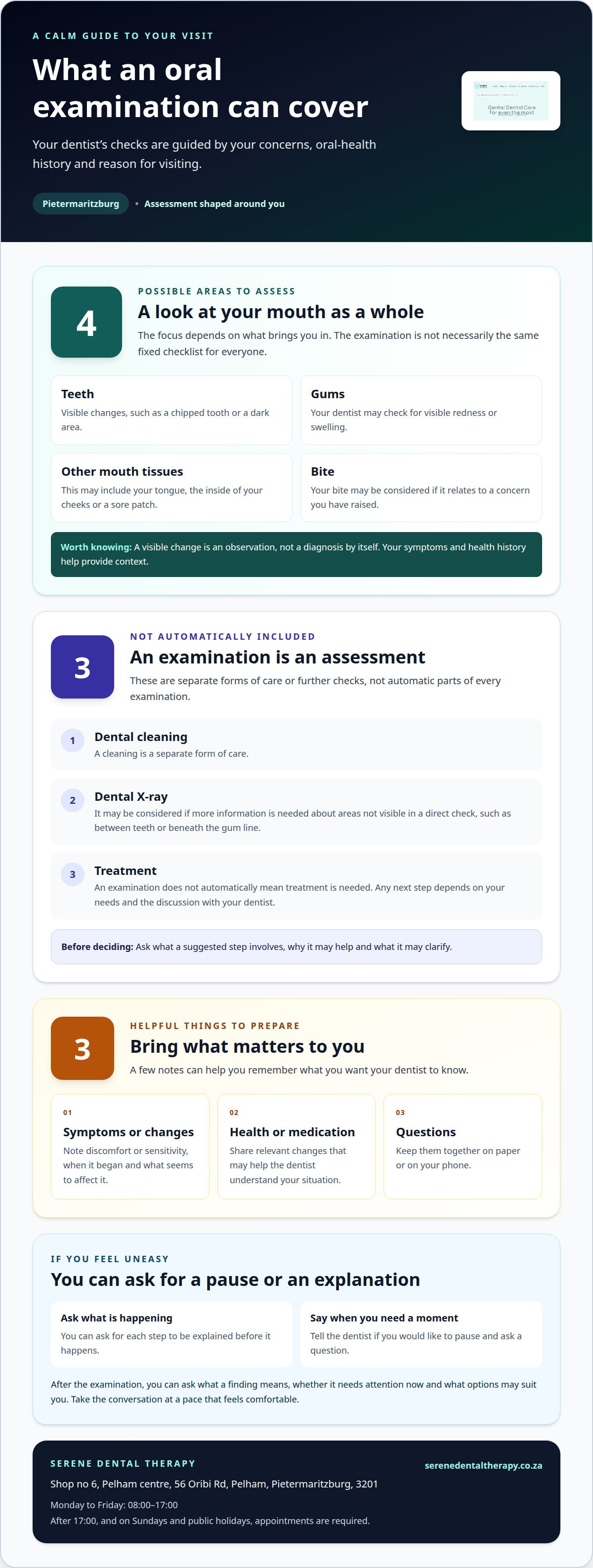
An oral examination gives the dentist a chance to assess your mouth and discuss changes in your oral health. They may look at your teeth, gums and other mouth tissues, focusing on what is relevant to your visit. If you’re unsure what an oral examination dentist may check, ask for an explanation as the assessment progresses.
Why an oral examination looks beyond visible teeth
Considering the mouth as a whole helps put a particular concern in context. For example, if an area feels uncomfortable, the dentist may assess it alongside the nearby teeth and gums. The examination helps inform a conversation about what they observe, but it does not guarantee a particular diagnosis or outcome.
Which concerns should you mention?
Tell the dentist about discomfort, sensitivity or changes you’ve noticed, even if they seem minor or come and go. Mention where you feel discomfort and whether anything appears to affect it. Relevant changes in your health or medication can also help the dentist understand your situation and decide what to focus on.
How is an examination different from other dental care?
An examination is an assessment. It does not automatically include a cleaning, an X-ray or treatment. A dental cleaning is a separate form of care, and an X-ray may be considered if more information is needed. If the dentist suggests another step, ask what it involves and why it may help before deciding how you’d like to proceed. For background on routine professional oral hygiene care, you can read about its place in wider oral health habits.
What may the dentist assess during your oral examination?
The areas your dentist focuses on depend on your symptoms, oral-health history and reason for visiting. They may look for visible changes to your teeth, check your gums and examine other visible tissues, such as your tongue and the inside of your cheeks. Your bite may also be considered if it relates to a concern you’ve raised. An oral examination is guided by your needs, rather than being the same fixed checklist for everyone.
MedlinePlus describes what can happen during a dental examination, including checks of the teeth, gums, bite and mouth tissues. Your dentist can explain which parts are relevant to your visit.
What can a visual check help the dentist notice?
A visual check assesses the areas your dentist can see directly. It may help them notice visible changes, such as a chipped tooth, a dark area on a tooth, redness or swelling along the gums, or a sore patch inside your mouth. These observations are not a diagnosis by themselves. Your symptoms and health history provide context, and the dentist can talk through what they see in clear, straightforward language.
When might dental X-rays be considered?
X-rays are not automatically part of every oral examination. They may be considered if your dentist needs to assess areas that are not visible during a direct check, such as between teeth or beneath the gum line. Whether an image would be helpful depends on your circumstances and what the examination suggests. If one is recommended, ask what it may help clarify before deciding on the next step.
To discuss an examination in a calm, individualised setting, find out about oral examinations at Serene Dental Therapy.
How to prepare for an oral examination and feel at ease?
A little preparation can make it easier to raise what’s on your mind. You don’t need a polished list or the perfect words. A few notes can help you remember what you want your dentist to know.
What should you tell the dentist?
Before your visit, note any discomfort, sensitivity or changes you’ve noticed, including roughly when they began and what seems to affect them. Add relevant updates about your health or medication. You can also write down questions, such as what a particular check is for or what the dentist is looking at. If a step is unfamiliar, ask for an explanation before it proceeds.
- Write down symptoms or changes you don’t want to forget.
- Note relevant health or medication updates.
- Keep your questions together, on paper or on your phone.
If you’re wondering why a dentist may look at the soft tissues in your mouth, the Mayo Clinic explains the purpose of oral cancer screening. You can ask your dentist which parts of an examination are relevant to your care.
How can you make the visit feel more manageable?
Let the dentist know if you feel uneasy, even if you’re not sure why. You could ask for each step to be explained before it happens, or say that you may need a moment to pause and ask a question. Tell your oral examination dentist what would help you feel more at ease. There’s no need to feel embarrassed: sharing your preferences gives the dentist a chance to respond with care.
Serene Dental Therapy explains what to expect before treatment and tailors care to your needs. You can learn about an oral examination at Serene Dental Therapy and bring any questions you’d like to discuss.
Choosing an oral examination dentist in Pietermaritzburg: what happens next?
After the examination, the dentist can explain what they observed in everyday language. You can ask what a finding means, whether it needs attention now and what options may suit you. An observation does not automatically mean you need treatment. Any next step depends on your needs and the discussion with your dentist.
How are findings discussed after an oral examination?
A helpful discussion gives you time to understand what has been noticed and ask questions before making decisions. If the dentist recommends a treatment, ask why it may help, what it involves and whether there are other options. Serene Dental Therapy explains what to expect before treatment and tailors care to each patient. You can take the conversation at a pace that feels comfortable.
Arrange an oral examination in Pietermaritzburg
If you’re looking for an oral examination dentist in Pietermaritzburg, Serene Dental Therapy offers a welcoming setting where your comfort and concerns can guide the conversation. The team explains what to expect and shapes care around your needs, helping you feel prepared to discuss what comes next.
You’ll find the practice at Shop no 6, Pelham centre, 56 Oribi Rd, Pelham, Pietermaritzburg, 3201. Weekday opening hours are Monday to Friday, 08:00 to 17:00. Appointments are required after 17:00 on weekdays and on Sundays and public holidays.
Take your next step at your own pace
You don’t need to have every concern neatly explained before seeking care. Starting a conversation can help you understand what you’d like to know and what feels right for you. Your questions are part of that conversation, and you can take time to consider any suggested next steps.
At Serene Dental Therapy, your comfort matters. The team explains what to expect before treatment and tailors care to each patient, so you can feel informed rather than hurried.
A visit can begin with sharing what has prompted you to come in. From there, you and the dentist can talk through the examination and any observations at a manageable pace.
Arrange a gentle oral examination with Serene Dental Therapy in Pietermaritzburg and bring your questions to the conversation.
Frequently Asked Questions
Is an oral examination painful?
An oral examination is generally gentle, though you may notice brief pressure or sensitivity, especially around a tender tooth or gum. Tell your dentist if anything feels uncomfortable, and ask for a pause or explanation. Mentioning nervousness before the check begins can also help. Sensations vary from person to person.
Do dental X-rays happen at every oral examination?
No, dental X-rays aren’t automatically taken at every examination. Your dentist may suggest them if an image could provide useful information that isn’t available from a visual check. If X-rays are proposed, ask what area they would show and why they may help in your situation. The decision depends on your oral-health needs.
How often should you have an oral examination?
In South Africa, the South African Dental Association recommends an examination every six months for most people. Your dentist may suggest a different interval based on your oral health and personal circumstances. A history of recurring concerns or changes in your general health, for example, may affect how often you’re advised to return. Ask what timing is appropriate for you.
Can an oral examination identify concerns before you notice symptoms?
Sometimes an examination may reveal a visible change before it causes discomfort, but it can’t guarantee that every concern will be found. Some changes aren’t easy to see directly, and your dentist may consider whether other checks would be useful. Appointments suited to your needs give you a chance to discuss changes, even when your mouth feels normal.
What should you tell your dentist before an oral examination?
If you’re looking for an oral examination dentist, mention relevant health conditions, medication changes and any previous dental experiences that may affect how you feel during care. You can also say if you have a strong gag reflex or find it difficult to keep your mouth open for long. Sharing these details at your Pietermaritzburg appointment can help the dentist adapt the discussion to you.